2

Our blog has moved!

3

You should be automatically redirected in 6 seconds. If not, visit
http://investeddevelopment.com
and update your bookmarks.

4
Showing posts with label mobile money. Show all posts

Thursday, November 3, 2011

Poverty-Fighting Mobile Transaction Systems (Part 2): Mobile Money Transactions

Last week we introduced this series that will highlight the different ways mobile phones can combat poverty. This week, we will discuss the first example of a poverty-fighting mobile transaction system. Mobile money transfer services provide financial inclusion benefits for the unbanked, and are the most heralded impact of mobile penetration.

Mobile Money Transactions
Perhaps the most well-known mobile transaction systems that engage the base of the pyramid are mobile money transactions. The various flavors of mobile money transactions (mobile payments, m-wallets, mobile banking, etc.) have revolutionized the way users send and receive money throughout emerging markets, bringing millions of previously unbanked users closer to full financial inclusion.

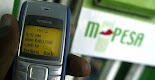
Safaricom’s M-PESA, the golden beacon of the mobile money industry, set a standard in Kenya that others are trying to follow. The telecommunications company released its mobile money service in March 2007 and currently has 14 million users in Kenya alone. Today, nearly 17% of Kenya’s GDP flows through M-PESA, even though many of these users do not have bank accounts. The resounding success of M-PESA has sent a message across the globe. There is tremendous demand from the unbanked for financial efficiency and cashless transactions.

Inspired by the success of M-PESA, others are quickly joining the movement. Competing telecommunications companies from Manila to Mexico have created similar models and even banks are deploying mobile payments with branchless banking models to serve the rural poor. Whatever the approach, mobile money transactions give the unbanked the opportunity for financial inclusion, including secure, cashless financial transactions. In most cases, users can transfer money, and pay bills with a simple and secure text message, or deposit/withdraw cash at any participating agent.

There are also less obvious benefits that come from the growth of mobile money transactions. Agents, who are usually small shopkeepers, enjoy increased revenue streams and increased customer presence in their stores. Because the money is “e-float” and not cash, the risk of funds being lost or stolen decreases significantly as well. 

Image Courtesy of Simpa Networks
However, for real financial inclusion, mobile transaction systems are going to have to expand their services beyond simple cashless transactions. Some of this is happening already. For example, Safaricom recently partnered with Equity Bank to develop M-KESHO in Kenya, a product that provides M-PESA users with interest bearing mobile savings accounts. Another example comes from Simpa Networks, an ID portfolio company that leverages mobile technology to finance the costs of solar home systems. The Simpa Regulator allows users to make payments with their mobile phone to pay off the cost of the system over time. In this way, mobile transactions can expand one of the most important aspects of financial inclusion, credit.  

Check back next week for examples of information exchanges made possible with mobile phones. 

Friday, September 23, 2011

Weekly Review September 19-23

Source
Banks and mobile network operators are working in an environment that is constantly evolving with the addition of new competitors, new regulations (or lack thereof), and new markets. The mobile payments world in emerging markets is experiencing explosive growth and widespread support, as evidenced in the following articles.

“First universal mobile payments platform goes live” on Mobile Money Africa
Luup is now providing universal mobile payment systems through a combination of Microsoft BizTalk Server and Temenos T24, a core banking software used around the world. Luup CEO Martin Wilson claims that the platform can serve corporate and retail users in both developed and developing markets on any mobile device on any mobile network. Successful mobile payment platforms are scalable and fall in line with regulatory and security requirements. Luup believes their service meets these criteria, “connecting senders and receivers of funds across the globe.” The integration of Temenos T24, a technology used in “over 1000 financial institutions in more than 125 countries across the world,” implies that Luup is highly adaptable and is likely to be successful globally.

“Banks have some good news… are they listening? by Kabir Kumar on CGAP
Although these are tough times for banks, a recent research project on branchless banking by CGAP, the Inter-American Development Bank, and Akya (a banking consultancy) found some good news. Branchless banking, though fiercely competitive in emerging markets between banks and MNOs, can present new and opportunistic business cases for banks. There are five key findings regarding the business case for banks in the collaborative report. First, a critical factor to success in branchless banking is a strong agent network. At low transaction volumes, in rural areas for example, an agent is the most economical option. Second, banks offer branchless banking because it is an additional and efficient channel to reach unbanked or under banked segments. This allows them to grow their market share, while increasing cash flow activity. Third, a strong agent network adds value for a branchless banking customer by offering a new level of convenience. Fourth, branchless banking promotes growth of the bank and markets, and also reaches new geographies and customers. Finally, banks practicing branchless-banking practices will find that payments can make a substantial contribution to profit. The full presentation, “Understanding the business case for banks in branchless banking” is available here.

“Liberate mobile payments for more inclusive economy” by Wesley Lynch on Mobile Money Africa
Despite the tremendous adoption of mobile money penetration in Africa, South Africa’s rate of adoption has been lagging in comparison. Wesley Lynch, CEO of Realmdigital, blames this on the regulatory environment in South Africa. The restrictive banking regulations also limit innovation from MNOs who could offer cheap and easy mobile transaction services to customers at the BoP. M-PESA’s famous success in Kenya has not been repeated in South Africa, “a country with 13 million unbanked citizens.” The major obstacle for mobile network operators to behave as banks has been government regulation. Once mobile network operators can obtain banking licenses in South Africa, the mobile payment ecosystem will open up a new, liberated economy.

“Nigeria: GSMA to Partner State on Mobile Money” by Obinna Chima on AllAfrica
The mobile payment industry in Nigeria has the support of the Global System for Mobile Communication Association (GSMA). The GSMA promises to ensure the successful adoption of mobile money in the country by working closely with the federal government and key banks and mobile network operators. Mobile payments transactions could improve trade and commerce significantly in Nigeria thanks to the high level of mobile penetration and the high number of unbanked citizens. Mr. Ross Bateson of the GSMA stated that mobile money would increase productivity and improve the Nigerian economy. Additionally, there are other opportunities beyond mobile payments that access to mobile can offer to enable development.

Follow us on Twitter
Like us on Facebook
Idea to enterprise with BETA

Friday, September 9, 2011

Weekly Review September 5 – 9

Image Source: Samsung
There’s never a shortage of news surrounding mobile technology. This week we read about new applications and smartphones, mobile money launching in Liberia and Zimbabwe, and the changes in the relationships between banks and telcos because of the growing popularity in mobile payments globally.

“Samsung launches Galaxy S II in Kenya” by Stewart Chabwinja via IT News Africa
There has been speculation that smartphones, which are coming down in price, will penetrate the African market and slowly replace “dumb phones.” Samsung Electronics has launched the Galaxy S II, an Android-powered smartphone in Kenya. It is expected that smartphones will drive Internet penetration in Kenya. Kenyans value their phones because of the many value-added services that leading mobile operators provide, most notably M-PESA and all of the other applications surrounding the mobile money transaction system.

iHub and Akirachix are bringing AppCircus to Nairobi, Kenya where 12 groups will pitch their apps in front of an international jury of industry experts. AppCircus is “a unique global traveling showcase of the most creative and innovative apps presented by their creators during some of the most influential international events in mobile/web.” The best apps will be nominated for the Mobile Premier Awards 2012, to be held during the Mobile World Congress in Barcelona. A list of the apps that are presenting is available at the end of the article. Some highlights include CrowdPesa, an app that locates M-PESA agents or ATMs in the local area, and 3GInnovators, an app that compares prices, ratings, and offers on products and services.

The Central Bank of Liberia has given approval to Lonestar Cell MTN and Ecobank-Liberia to partner and provide a mobile money product in the Liberian market. The product platform is going by the simple title of “Mobile Money.” Lonestar Cell MTN is the largest mobile services provider and the first telco in Liberia. Mobile phone penetration is around 45% in Liberia, while fixed line penetration is less than 1%, due to unrepaired telephone lines damaged during wartime (stats via PPIAF). In addition, “only 10% of Liberians have bank accounts.” This, coupled with growing mobile penetration, presents an ideal market opportunity for mobile money.

Econet Wireless, the largest telco in Zimbabwe, announced this week that it will be launching its mobile money service this month. The m-wallet is currently being piloted and will be live by the end of the month. In 2009, according to World Bank data, Zimbawe’s mobile penetration was around 3 million subscribers, or 25% of the population. In 2011, The Paypers reports that Econet’s customer base has grown to around 5 million since 2009. The market is experiencing explosive growth. Econet is capitalizing on the window of opportunity and leveraging its 73% market share. Its new mobile wallet can be used for purchases or transfers worth USD $20 or less.

In the never-ending effort to understand the complex world that is mobile payments, we often compare mobile payments in the developing world to banking in the developed world. The relationships between telcos and banks are reaching new, unprecedented stages. Already seen in Asia and Africa, telcos are acting like banks. In Canada, “mobile carrier Rogers has filed to become a bank under Canada’s federal Bank Act.” By doing this, Rogers will have the chance to earn a percentage of the revenue from payments transferred over a mobile phone. The mobile payments industry is expected “to become a $670 billion market by 2015,” (notably driven by developing countries, where mobile payments will double by 2015).  Although there are vast differences in banks between the developed and developing world, it seems that the gap may begin to close, as users tend to rely on their phones more often.


Follow us on Twitter
Like us on Facebook
Learn more about BETA

Friday, August 19, 2011

Weekly Review August 15-19

In response to the slow but steady increases in smartphone adoption and data usage in Africa, developers are releasing mobile applications to increase interoperability in the mobile money industry. This week, we read about new mobile apps appearing in emerging markets that increase access to financial services. We also read about mobile Internet access throughout Africa that allows for the adoption of such services. Africa is leveraging mobile technology for social change.

“Kenya: Tech Firm Pulls Down Cost of E-Commerce with New App“ by Paul Vafula via All Africa
Craft Silicon has released a new mobile application, Elma, to facilitate mobile commerce transactions in Kenya. The application runs on 3G-enabled mobile phones and facilitates transactions among users and service providers who have installed the application. For a subscription fee of Sh80/month, users can “transfer money, pay bills, buy airtime, buy stocks, and check commodity prices.” Elma is claiming to be a solution for interoperability amongst mobile money service providers, no matter which Mobile Network Operators (MNO) hosts the service. By facilitating interoperability, more users in emerging markets can take advantage of mobile money transfer services.

“Application to wean mobile money off SIM card” by Patrick Githinji via Mobile Money Africa

Currently, mobile money users are tied to their MNO and can only make transfers to other users hosted by the same provider. Now, Orange Kenya allows money transfers by way of Java and WAP applications, unattached to SIM cards. Although this means that consumers won’t have to belong to a particular telecom, it will drive demand for such services. Interoperability leads to increased transaction frequency and increased adoption. According to the Orange CEO, the new Java and WAP applications will allow users to transfer money with their mobile device to “anywhere in the world.” Along with the start of 3G services in Kenya and a rise in smartphone adoption (see below), the demand for applications downloaded from or hosted on the Internet is growing. In addition to Orange’s new application and Craft Silicon’s Elma, Google is expected to allow mobile payments on the Android operation system later this year.

“Smartphones will drive Africa’s Internet uptake” by Savious Kwinika via IT News Africa
Smartphones and feature phones are required to facilitate the increasing adoption of mobile applications like Elma. While the most popular phone in Africa is the Nokia “dumb phone,” smartphones are becoming more affordable. Half of the African population owns a mobile phone. Twelve million Africans have data plans and this number is expected to grow to 265 million by 2015. Research in Motion, the maker of BlackBerry, reports growth in data usage amongst its customers. Although Internet penetration is currently low in Africa, leveraging mobile ubiquity to promote mobile Internet will “have a huge impact on productivity and efficiency in Africa” for individuals and businesses alike. Furthermore, more smartphones means more applications, opening the door for interoperable mobile money transfer services and financial inclusion.

“8ta slashes data prices – again” via IT News Africa
In addition to increased demand for applications, smartphones, and mobile Internet, data prices are falling in Africa. South Africa’s 8ta is offering a 3GB pre-paid data bundle for about $21USD. There’s no contract, so users can top up whenever they need to. 8ta also offers a 10GB post-paid data package.

“Dual SIM mobile phones ideal for Africa” via IT News Africa

Many Africans own two mobile phones to take advantage of the offerings of two different MNOs. In response, Samsung offers dual SIM phones and predicts that they will gain 15% of the market share with this offering. The dual SIM phone allows users to switch between SIM cards easily to take advantage of the network depending on where they are and whom they want to call. This type of phone gives users the opportunity to maximize their airtime on the network that suits them best in different scenarios. In the case of mobile money, it would allow users to make transfers with the mobile service provider or two different operators. This, however, does not allow for universal interoperability like Internet-enabled mobile applications.

Friday, August 5, 2011

Weekly Review August 1-5

As the mobile money industry grows and evolves, we are seeing new business models emerge. More and more mobile phone users around the world are finding access to financial services through branchless banking. Here at ID, we’re working to stay on pace with the ever changing risks and opportunities.

The proof that the mobile payment industry is growing and evolving is in the numbers. In 2011, 141.1 million users worldwide will transfer a forecasted $86.1 billion, according to Garter, Inc. and the Mobile Payment Magazine. Users are up 38.2% from 2010 and the volume of transfers is up a staggering 75.9%. Additionally, SMS and USSD will continue to be the dominant access technologies in developing countries. Money transfers are also driving mobile commerce, which is where the door opens for emerging business models. With new business models, new risks and complexities present themselves simultaneously.

MobiKash Afrika is a mobile commerce service provider. This week, the company launched their mobile banking platform that will be operable across Kenya’s four GSM networks and across participating banks. This will allow users to pay for services and products with their phones and cash-in/cash-out at any one of the anticipated 3,000 agents. MobiKash will be vying for market share with the dominant M-PESA, which has about 20 million customers. On the other hand, MobiKash has the advantage of offering cheaper transaction fees than M-PESA and is operable across all mobile networks.

“Africa sprints ahead with mobile banking” by Vanessa Clark via Mobile Money Africa
Whether it’s mobile network operators offering mobile money transfer services, or banks offer mobile banking technology in partnership with a MNO, the African continent is a breeding ground for mobile money operations. In fact, Visa recently purchased Fundamo, a South Africa mobile financial services infrastructure provider, for $110 million. African countries “are making large strides forward in this space,” fostering new mobile banking models for the banked, unbanked, and under-banked. In a continent with an ever increasing mobile penetration rate (currently at 50%) and an estimated 70% unbanked or under-banked, access to financial services via mobile phone is the ideal solution. The CEO of FNB Africa, Danny Zandamela, said, “Mobile money services offer an inexpensive and convenient method to bridge the gap between the banked and unbanked. The African continent, by pure virtue of being one of the fastest growing mobile phone markets in the world, is the ideal environment for such innovation.”

Pakistan is one of the first countries in the world to introduce regulations specifically designed to encourage branchless banking. The regulations allow for a variety of business models and an extended agent network to deliver financial services on behalf of banks. The State Bank of Pakistan recently amended the regulations to further encourage branchless banking and increase access to financial services for the poor. Biometric fingerprints are no longer required to open an account, only a digital image of the account opener. Additionally, there are no maximum account balances and there have been substantial increases in transaction limits. Finally, a new “Level 0” account allows more people to open an account without physical paperwork. According to Mr. Mansoor Siddiqui, the Director for Banking Policy & Regulations, the changes were necessary to keep pace with the rapidly evolving industry.  


Like us on Facebook
Follow us on Twitter
Learn more about BETA

Friday, July 15, 2011

Weekly Review July 11-15

At ID, we often discuss the benefits of mobile phones for those at the Base-of-the-Pyramid. Access to mobile phones is proven to increase financial inclusion and accessibility to basic goods and service. This Weekly Review examines the benefits of mobile phones specifically for migrant workers.

Forty million Indonesians do not have access to formal financial services. This lack of financial inclusion stunts growth and development in the region. The government is working to create solutions for its people. Mobile money services have been successful elsewhere, and would be welcomed by the estimated 70% of the population with mobile phones.  If the government were to “expand the regulatory framework for service providers to use mobile and electronic banking… banks and non-banks [could] provide a wider range of services through low-cost mobile banking solutions such as short message service (SMS).” Importantly, the article notes, this would enable Indonesian migrant workers to send money home easily and safely. In fact, this idea has been proven successful for Filipino migrant workers, who sent “remittances worth millions of US dollars home every month.”

Last year, 4,000 Indonesians worked temporarily in South Korea. So far this year, 3,000 Indonesians have migrated to South Korea to work temporarily. As a result of the rising numbers, the Indonesian government and the National Agency for the Placement and Protection of Indonesian Migrant Workers announced a plan to provide 8,000 to 10,000 mobile phones each year to migrant workers. This deal is “in cooperation with the local manufacturer PT Nurkumala Abadi, a subsidiary of South Korea-based LG.” The goal of the plan is to encourage migrant workers to communicate consistently with their families and related government authorities at home to enhance their safety and comfort while working abroad. The government hopes this plan will prevent tragedies like the recent beheading of an Indonesian maid working in Saudi Arabia.

Creation Investment Social Ventures Fund will invest $5.5 million in Eko India Financial Services, a “mobile banking technology provider in India.” Eko India provides financial services India’s unbanked, particularly to accommodate migrant workers. To date, Eko India “has served 912,455 customers through its 1,300 customer service outlets and employs 100 people.” Creation Investments CEO Patrick Fisher states: “We believe that Eko has best-in-class technology which gives easy, secure, inexpensive and convenient last-mile connectivity to the unbanked, migrant workers and the poor.”

“Staying in text” by Tammy Grubb via Chapel Hill News  
For Hispanic migrant workers and immigrants living in the United States, learning English can be an overwhelming obstacle to communication. To ease the transition for Hispanics in the US, there is a new SMS messaging service called ReK2 (pronounced reh-CAH-dos). ReK2 helps users learn English by sending daily vocabulary. ReK2 also “sends out weather reports and lets users post and read classified ads” to find work.  More than 450 users in North Carolina and Virginia use the service.


Like us on Facebook
Follow us on Twitter
Learn more about BETA

Friday, July 1, 2011

Weekly Review June 27 - July 1

This Weekly Review includes stories on a key industry trend: mobile penetration in Africa lending itself to financial inclusion and economic and social development. 

via Afrographique 
“Mobile phones in Africa” by Ivan Colic via Afrographique 
We recently came across the blog Afrographique by Ivan Colic. Colic collects data from reliable sources like the World Bank or the IMF, and presents the information in aesthetically pleasing and easy-to-understand format. Check out his site to see many more colorful and informative infographics to gain some insight on Africa and its people. His most recent post tells us that “in 2011, there are 32 non-smart phones for every 1 smart phone” in Africa. By 2015, the gap will close slightly to “5.6 non-smart phones for every 1 smart phone.”

“Activate 2011: Mobiles look set to play a big role in Africa’s development” by Madeleine Bunting via The Guardian
At the current growth rate, everyone in Africa will have a mobile phone by 2020 (Praekelt Foundation). Relatedly, economic development in Africa is expected to rise dramatically over the next five to ten years. Mobile phones will lend themselves to significant economic and social development and “the race is on to find what mobiles can do in areas as disparate as public health, governance and education.” Mobile money and Internet access are perhaps two of the most significant development leaps made possible in rural areas where banking and educational services are limited. Bunting describes many other examples of the benefits of mobile phone penetration in Africa, even if the most popular phone is the basic Nokia with nothing fancier than SMS capabilities.

“Mobile banking services to help two billion people by 2020” by Fredrick Onyango via Business Daily Africa
A recent Boston Consulting Group study reports that mobile money services will provide financial inclusion for two billion people by 2020 and drive development in emerging markets, especially Africa. Financial inclusion fosters “entrepreneurship, new business creation and new jobs.” The report found that the need for mobile money is great: “some 72 per cent of the population in developing countries are without access to banks or credit cards.” Many mobile money services are leading the way for social and economic development, including most famously M-PESA and our own portfolio company, SlimTrader.

“Teachers to Receive Salaries Via Mobile Money in Rwanda” by Bosco R. Asiimwe via Mobile Money Africa
Africa is notorious for slow-moving money. In an effort to pay teachers on time, the Teachers’ Credit and Savings Cooperative – Umwalimu SACCO will employ mobile money transfer services to pay their staff. In the past, teachers had to make long, expensive, and time-consuming journeys to collect their paychecks. This is another example of a simple solution with mobile phones that saves a lot of time, effort, and money that can now be spent elsewhere. The article notes that some teachers may invest in solar panels with their savings.

“Mobile money coming to Ethiopia” via Mobile Money Africa
M-Birr is the newest mobile money service provider in Africa, finally bringing services to Ethiopia. M-Birr’s parent firm is NCL Technologies, an Irish company. The government has historically controlled Ethiopia’s ICT industry. Late last year, the Ethiopian government hired France Telecom to manage the newly restructured Ethio Telecom. Ethio Telecom is the only ICT provider in Ethiopia, the country with the fifth-fastest growing economy worldwide according to The Economist. Ethiopia’s mobile subscriber base is growing and the government is investing in national infrastructure to facilitate and meet the demand for mobile technology including Internet access and mobile money services like the ones offered by M-Birr. 


Like us on Facebook
Follow us on Twitter
Learn more about BETA

Friday, May 6, 2011

Weekly Review May 2 - 6

This week’s Weekly Review contains articles on mobile technology in emerging markets. Articles include mobile money success stories, challenges, and ways to develop the industry by offering more services, addressing key issues, and expanding access to Internet.  

Before the articles, we’d like to acknowledge the Sankalp Forum in Mumbai, India that ended today. Working to enable the flow of capital between impact investors and social entrepreneurs, Sankalp Forum focuses on five high impact sectors. We’re especially interested in the Technology for Development sector, where they touch on our focus areas of mobile technology and alternative energy. Beyond Profit, whose articles regularly make the Weekly Review, is live tweeting from the conference. Two of our favorite tweets from @beyondprofit are: “'The rural economy will be run by renewable energy.' #SankalpForum” and “Fact: There are over 5 billion phones in the world. #SankalpForum.” Check out the hashtag for more tweets straight from Mumbai.

“From walkie-talkies to mobile banking” by Annalise Briggs
In addition to M-Pesa’s mobile money success in Kenya, we see successful mobile money applications in Latin America and throughout Africa from our portfolio companies Frogtek and SlimTrader, respectively. Now, there are mobile money success stories in Haiti, too, a place that so desperately needs investment in development. Mercy Corps has partnered with mobile operator Viola and the Haitian bank Unibank to offer mobile wallets to Haitians. Mercy Corps provided 20,000 Haitian families with stipends and delivered the cash via mobile phones. Like a debit card, the money is deposited securely via SMS to their account number. This technology revolutionizes the way Haitians do business. Now entrepreneurs like Morse Alexis can take payments in their local shops via mobile phone. This means that Haitians can save and transfer money securely.

“Happy Days at G-Ghana” by Ben Cole, Google Africa
The Google Africa team held their second annual G-Ghana event in Accra, the capital of Ghana. Google hosts the event, allowing local attendants to “learn, innovate and meet others to create applications and businesses that help build a vibrant relevant Internet ecosystem in Africa.” The potential for adoption is there, and will be realized with help from the exponentially fast adoption of mobile phones and the increasing efforts to electrify rural Africa. Google answers questions about its products, like the App Engine, to help local technology enthusiasts provide products and services in the area. Another impressive move from Google is their new platform, Google Trader, that can provide “Africa-centric classifieds” on mobile web and, more importantly, over SMS.

“100% Broadband for Africa” by Alan Knott-Craig
Africans have embraced mobile technology; just consider the record high adoption rates. The adoption of mobile phones has made life more efficient and productive in Africa, especially through the use of mobile money for both individuals and small businesses. To go one step further and “make the Internet universally accessible” by way of wireless, mobile access, or even private servers, will stimulate further economic growth creating more jobs and more opportunity for citizens. Internet will allow entrepreneurs to access resources like Google’s App Engine to create more goods and services for the BoP. Furthermore, universal Internet will also increase the accessibility of basic services and political governance. Interestingly, the Knott-Craig points out:  “It is no coincidence that four of the top five African countries ranked according to broadband penetration have recently experienced political revolution:  Tunisia, Egypt, Algeria, and Morocco.” 

Despite the mobile money success stories, there are challenges and complexities for mobile payment systems. A report from PlaNet Finance and Oliver Wyman studied two pilot mobile money programs, and presented what business models worked for the projects. However, to ensure the continued success and growth of the mobile money industry, Next Billion proposes three issues that must be addressed:  regulation, competition, and interoperability. First, banks and consumers alike will be seeking regulatory oversight to guarantee deposits. Second, we know that there is growing competition in the industry:  an example is SlimTrader, the newest addition to our portfolio. Finally, interoperability means that mobile payment systems must be compatible and transferable. Just like you want to be able to call your friends on different mobile phone networks, you need to be able to pay people on different mobile payment networks as well.  If we can address these three issues, then mobile payment systems will continue to grow in their success. 

Friday, April 1, 2011

Weekly Review March 28 - April 1

Via NextBillion
Every week at ID, we read about what we do and what we like. This week we read a lot about mobile technology.

In the Philippines, Global Telecom runs the GCASH mobile money service and is starting a program to support the government’s poverty alleviation programs. The platform, GCASH REMIT, supports the Conditional Cash Transfer (CCT) program, a government initiative that enables the country’s poorest families “to pay for health care, nutrition and education, provided they comply with certain conditions such as keeping children in school, attending regular health check-ups and vaccinating their children.” GCASH REMIT allows for the widespread, efficient distribution of the CCT grants.

“In Africa Hi-Tech is Taking Centre Stage” by André-Michael Essoungou @allafrica
Africans are depending on mobile technology now for banking, travel, shopping, and more. It’s changing their way of life and finally allowing for development. The “information and communications technology (ICT) sector” has seen unparalleled growth in Africa, “with annual revenues now estimated at around $50 billion.” The unparalleled growth, outside investments, and regulatory reform are the three major contributing factors to the success in the ICT sector. Today, almost 400 million Africans have mobile phones and 100 million have Internet access. Outside investors, from big companies like Vodafone and smaller ones like Invested Development, are attracted to the high growth and high returns in the industry. Many institutions and policies have been implemented throughout Africa.

Besides the quick, efficient transfer of funds for individuals, mobile applications can also be used by small and medium sized businesses (just like FrogTek in South America). Small- and medium- sized businesses need to take and make frequent payments, and mobile money applications are a convenient, cheap, and quick way to do so. For a small business, mobile applications allow for increased efficiency as cash moves quickly and inventory moves smoothly. Research shows that nearly 33% of mobile money transactions were to purchase or sell goods or services in Uganda. Another research study in Tanzania reports on the benefits of mobile applications for entrepreneurs.

Mercy Corps is working to rebuild Haitian communities by offering easy access to financial services and unconditional grants. However, in order for mobile money to be effective, the mobile ecosystem needs to be complete with local vendors who are “willing and able to support small-cash out needs.” It was difficult to find such vendors, but finally Mercy Corps found a man with an entrepreneurial sprirt named Jean Phillip Janvier, who enabled cash-outs in Saut D’Eau. Seeing Jean Philip’s success encouraged more vendors and continued to increase the effectiveness of Mercy Corps’ mobile noney program in Haiti.

Western Union is one of the world’s most trusted companies for money transfers. With over 80,000 participating agencies, people in 45 countries can now send money to the mobile wallets of 13.5 million M-PESA subscribers in Kenya. This new partnership will “benefit thousands of Kenyans working abroad” allowing them to send money home.  With the growth of the mobile money industry, companies are attracted to financial and strategic benefits that come hand in hand with social enterprise. Western Union will continue to create agreements with other mobile operators throughout the world. 

Friday, March 18, 2011

Weekly Review March 14-18

Every week at ID, we read a lot about what we do and what we like. This week we read a lot about mobile technology at the base of the pyramid.

CGAP focuses on branchless banking, and this post focuses on the three levers of adoption:  product, pricing, and agent. We’re particularly interested in the product lever, since we’re always looking for investment opportunities in start ups in the areas of mobile technology and alternative energy. CGAP’s product lever includes providing a product for low income customers that enables them to move their money and pay their bills (i.e. the Base of the Pyramid). FrogTek and SlimTrader, two BSP Fund investments, offer products like this. CGAP basically points out that the existing products and services are inadequate – 27% of BoP customers in South Africa have lost money using mobile wallets. In general the market is underserved and needs improvement. In fact, there is a need, an opportunity, for more companies like FrogTek and SlimTrader.

 Diego using FrogTek's technology in Bogota
Photo Courtesy of FrogTek. 
FrogTek’s latest post is a report from the ground in Bogotá, where their product is being used every day. FrogTek provides mobile software applications for small retail shops, restaurants, or other micro-retailers at the Base of the Pyramid to manage their inventory efficiently and effectively.  Check out their blog for the first hand report at Damaris and Diego’s shop, where they use FrogTek’s application Tiendatek, saving them time and money and allowing them to grow their business.


This article reflects on the ironic high speed adoption of mobile phones in a country, Bangladesh, which lacks the electricity to charge said phones. This is exactly why at ID, we are committed to investing in the areas of alternative energy and mobile technology. Each is essential to the development of emerging markets, and the eradication of poverty at the BoP.  This astonishing fact: the mobile phone “sector will grow seven-fold in rural areas by 2015 despite a lack of an electricity network to feed the technology device,” is a call to entrepreneurs.  The article offers more staggering and frankly, encouraging, facts about the future growth of the industry and the need for mobile technology and alternative energy to come together.

This article is a good example of a big company innovating specifically for the base of the pyramid.  Smart Communications Inc., a Filipino company, is launching a “Panalo Phone” specifically designed for the segment of Filipinos – the BoP -- that cannot afford mobile phones.  A simple design with basic features, the Panolo Phone will allow for the BoP’s inclusion in the mobile world. 

Friday, February 25, 2011

Weekly Review February 21 – 25

Every week at ID we scan the web for articles that relate to what we do and what we like. This week we read a lot about the use of and mobile technology for the development of emerging markets.


Image via NextBillion.net

“New Resource: CGAP Launches Branchless Banking Database” Next Billion’s Interview with Mark Pickens, CGAP
Mark Pickens is a Microfinance Specialist at The Consultative Group to Assist the Poor (CGAP). The CGAP recently compiled their research and introduced the Branchless Banking Database (available in Excel), which is a useful resource offering data about the emerging mobile money industry. Next Billion interviewed Pickens to find out more about the resource, which is useful for any social entrepreneurs, “mobile network operators, microfinance institutions, banks and policymakers” considering using mobile technology in emerging markets. Check out the database and read the full interview for more information about the study and the resource.


This post is the final piece of a five post blog series introducing the CGAP’s Agent Network Management Toolkit, the product of more than a year of extensive research on the profitability of branchless banking. The research looks at the interconnected supply chain of branchless banking, including mobile money companies like M-PESA. The newly introduced toolkit offers a financial model to analyze the cash flow of all members in the supply chain and ways to ensure that there are positive cash flows throughout the chain. This toolkit will allow for the further progression and continued momentum of the branchless banking industry.

“Mobile money in 2006 and 2016” by Michael Klein
Since the release of the Making Finance Work for Africa report in 2006, M-PESA today “helps some 60 per cent of all adult Kenyans with payment services and is all the rage in the world of microfinance,” throughout Africa. Mobile money has revolutionized the way Africans live, work, travel, and do business every day, just like SlimTrader. However, this revolution has put pressure on banks in Africa to keep up with mobile providers like M-PESA and SlimTrader. The way people think about and handle money is changing and there is a lot in store for the future. Klein is looking forward to 2016 to see what has changed over the course of 10 years.

“The secret of economic growth” by Aleksandr Shkolnikov
This article reflects on the secret of economic growth. In fact, mobile technology has been the highly successful key to economic development. However, as Bill Clinton states, technology alone is not enough. The technology must be accompanied with continuous innovation, institutional support, and investments in order to allow for the eradication of poverty and the true, genuine development of emerging markets. 

Friday, February 4, 2011

Weekly Review for January 31-February 4

Every week at Invested Development we scan the web for articles that relate to what we do and what we like. This week we read a lot about mobile technology in emerging markets, new applications for homeowners to monitor energy use, solar energy, and social entrepreneurship. 

“Using Mobile Manners” by Abby Callard
In their latest post, Beyond Profit discusses the ways entrepreneurs are using the growing number of mobile phone users to create services that benefit the poorer consumers in emerging markets. A study in Gambia indicated that “cloud phone” services will benefit users in rural areas, where 86% of customer share their phones. Movirtu is credited for the “cloud phone” concept, allowing users to access their own prepaid phone service and account from any phone. The study points out differences in mobile habits between rural and urban users, helpful for social entrepreneurs looking for opportunities in mobile technology.

GOOD recently wrote about three applications that will help homeowners manage how much energy these use:  Microsoft Hohm, Google PowerMeter, and Tendril. The applications offer different ways to track, automate, and recommend ways to reduce energy usage.

Hewitt is the Director of Social Entrepreneurship at Toronto-based MaRS, “a convergence innovation centre,” where she has implemented a Social Innovation Generation team. MaRS supports entrepreneurs in the areas of “information technology, clean tech and social innovation” working towards “systemic, sustainable, social change.” Check out her post to read her inspiring vision for social entrepreneurship in 2011.

The Gates Foundation and USAID introduced The Haiti Mobile Money Initiative in June 2010 alleviate the devastation and to enable the mobile money industry. Mobile money allows for the safe and speedy delivery and transfer of cash, enabling humanitarian agencies to act faster and more efficiently.  Now, there are competing partnerships among Haiti’s prominent banks and phone operators.

A reflection on the process of “going green” in everyday households, Grover debates the downsides of solar energy. He relates that the solar feed-in tariffs in the UK are enticing everyday homeowners to invest in solar energy. Most importantly, taking the step and going solar changes the relationship people have with their energy. They are now much more aware of when it is produced and how much can be and is used.

The Acumen Fund pays homage to Husk Power Systems in their latest blog post. HPS works to deliver electricity throughout rural India. Not only does HPS work to alleviate poverty, the organization improves the lives of their employees. HPS provides their employees with health insurance, professional training to build long lasting skills, credit services, and a career to break the cycle of poverty.