2

Our blog has moved!

3

You should be automatically redirected in 6 seconds. If not, visit
http://investeddevelopment.com
and update your bookmarks.

4
Showing posts with label mobile technology. Show all posts

Friday, December 23, 2011

Weekly Review December 18-24

This week, we took a look at technology stories that will improve the African lifestyle. 

Well done to Ushahidi on raising a $1.9 million round from Omidyar Network. However, as we know, not every Kenyan techie success story is carried with the same glory and ease demonstrated by M-PESA.  Ushahidi’s experience is a great example of the efforts that go into the technology, the pitch, and the business model, and the repeated revisions and improvements. Afrinnovator offers insights into three lessons Ushahidi learned and how future innovators can learn from them.

Dispelling the Top Five Mobile Money Myths” by Ignacio Mas on NextBillion
Interestingly, there are still some doubts about the effectiveness on mobile money (not everywhere is a “Kenya”). Ignacio Mas on NextBillion clarifies the myths that the unfamiliar may assume about mobile money. Measures are in place to prevent money laundering. It’s easy to learn on a familiar tool. It’s safer than hiding cash under mattress. In short, mobile money is useful in its simplicity and that is what makes it so effective.

MTN, one of Africa’s largest mobile network operators (MNOs), has signed an MOU with Fortis to provide mobile money services to its customers. Fortis is a leading provider of microfinance in Nigeria. The combination of the extensive agent networks should lead to a successful rollout of mobile money in Nigeria.

Airtel Ghana is now providing mobile commerce services. The Airtel Money platform will allow customers to pay bills, transfer money, and withdraw money from ATMs.

ICT tools such as mobile phones, mobile broadband, and tablets can provide real time information to rural farmers. We’ve seen such agri-mobile application as mFarm, showing that innovation is coming from the bottom up. Now the idea is supported by the Technical  Centre for Agriculture and Rural Cooperation, who is calling for the distribution of ICT tools to rural African farmers. African governments should be spending 3.5 percent of GDP on agricultural extension services, as agriculture generally accounts for 30+% of the continent’s GDP.

Follow us on Twitter.
Like us on Facebook
Learn more about BETA.

Friday, December 16, 2011

Weekly Review December 11-17

This week, headlines on technology and mobile phones in India caught our attention. The innovations and solutions to existing problems in the market continue to inspire us.

India’s ‘missed call’ mobile ecosystem” by Katie Fehrenbacker on Gigaom
This article called a missed call “the poor man’s text message” in India. The missed call is a great example of users in emerging markets taking advantage of the resources available to them. Although it means extremely low average revenue per user (ARPU), every telecom’s nightmare, it presents significant opportunities for innovation from social entrepreneurs.

The World’s Cheapest Tablet, Finally on Sale” by Margherita Stancati on WSJ India Blog
We first reported on this back in October, and now it is officially on the market. Aakash, the US$35 Android tablet made by DataWind is now available for sale. An upgrade is coming in the New Year, but this tablet should make a significant splash in India. You can order one here.

Pursuing a world of mobile wallets” on Times of India
Mobile phones are integrated into almost every aspect of daily life in India, yet there is still more room for mobile phones to provide valuable services.  For example, mobile banking seems to be playing a critical role in the quest answer for mass financial inclusion. This article in Time of India points to trends that would lead to the mobile phone and mobile wallets being in all facets of business and government.

The Planning Commission Deputy Chairman Montek Singh Ahluwalia is pushing for increased broadband and mobile penetration in India. Ahluwalia believes this will ultimately promote financial inclusion, while lowering the cost of doing so. This will eventually enable all citizens to receive the benefits of financial exchanges.

Thanks to everyone who came out to CleanTechThatMatters on Wednesday! We were delighted with the turnout and excited about all of the projects we heard about. Keep an eye out for the next one! 

Follow us on Twitter.
Like us on Facebook 
Learn more about BETA

Tuesday, December 13, 2011

Rich People, Nerds, and the Kenyan Context: Thoughts from the Nairobi Office Part 4

Editor's Note: This is the last post in Sean Smith's series from the Nairobi office. Catch up on anything you missed by clicking the links below. 

The Kenyan Context 

These groups of Rich People and Nerds are slowly beginning to identify each other.  They are slowly feeling each other out and gaining a better understanding of early stage investment and how to use it.  Yet, the fact that these groups exist and are starting to build off each other is not what is most exciting about Kenya.  What is most interesting is that this activity is unfolding in a country of technology adopters.

James Surowiecki of the New Yorker wrote an article titled "Innovative Consumption" in which he outlines why the United States has consistently been able to produce innovative companies like Dropbox.  In essence, he points to the willingness of Americans to embrace new technologies as an oft-overlooked factor in America's history of cranking out innovative technologies.  I would argue that the same mentality of technology adoption exists today in Kenya. 

The most obvious example of a technology adopting culture lies with M-PESA.  In just four short years M-PESA has gone from pilot to almost complete penetration of working age adults.  The service has already facilitated more transactions within Kenya than Western Union has throughout the entire world.  To be honest there are probably many factors that led to this success (the regulatory environment, Safaricom's dominant market share, etc.), but one would be remiss to ignore the fact that overwhelmingly Kenyans put their trust, and their hard earned cash, into an untested technology.  For a more scientific piece of evidence I'd like to point to Intel's "Technology Metabolism Index," which maps how technology diffuses through the total population of a given country once introduced.  Kenya received a +5, the highest possible rating for diffusion of new technologies.

While it may seem a bit ridiculous to many Americans that anything like Silicon Valley could spring up in East Africa, our team at Invested Development is confident that these three forces are going to lead to many more success stories coming out of Kenya. We’re just excited to be a part of it.

#CleanTechThatMatters is on December 14th. 
Follow us on Twitter.

Monday, December 12, 2011

Rich People, Nerds, and the Kenyan Context: Thoughts from the Nairobi Office Part 3

Editor's Note: This is the third installment of Sean Smith's series on Rich People, Nerds, and the Kenyan Context. Be sure to catch up on Part 1 and Part 2 if you missed them. 

The Nerds

The Rich People are only relevant and useful if there are large numbers of "Nerds" that are hacking away at new technologies and scheming how to launch the next big thing. One of the most remarkable things about Kenya is that the term "Nerd" and some of its negative connotations seem to have little or no relevance here.  Rather, to be a techie, to sit and write lines of code is exciting, hip, and a path to generating a stable income.  The university and technical college ecosystem in Nairobi is graduating hundreds if not thousands of Computer Science majors each year.  When you factor in the additional training that can be found at Safaricom Academy, Samsung's newly announced Engineering Academy, the eMobilis Mobile Training Academy, and m:Lab's Trainee Program (amongst others) what you get is the nearly 6,000 members of the iHub who proudly call themselves techies. 

These techies are part of a Kenya that prides itself on innovation, entrepreneurship, and technical acumen.  They are intelligent, tech savvy, and hungry to create Kenya's next great success story.  They earn a better income than many their age simply by shopping themselves out as freelancers while hacking away at their own ventures on the side.  In Nairobi, to be technical is cool and people are getting technical in a hurry.  If you drop by any of the numerous training sessions in Nairobi you are as likely to meet a taxi driver learning to code as you are the hunch backed, introverted stereotype we identify as "Nerds."

Check back tomorrow for the final post in the series. 

#CleanTechThatMatters is on December 14th. 
Follow us on Twitter.

Thursday, December 8, 2011

Rich People, Nerds, and the Kenyan Context: Thoughts from the Nairobi Office Part 2

Editor's Note: This post is the second installment in Sean Smith's series on Rich People, Nerds, and the Kenyan Context. Click here if you missed Part 1. 

The Rich People

The most important kind of Rich Person a startup hub can have is successful technology entrepreneurs that are looking to support new startups.  Often, this is subject to a chicken and egg dilemma. Without support, introductions, and investment from successful industry veterans it is a difficult path for startups to find success.  Kenya, however, seems to be on the verge of graduating its first class of successful technology entrepreneurs.  Organizations like Kenya Data Networks, the Wananchi Group, Seven Seas Technologies, Craft Silicon, Cellulant, and Ushahidi have all been successful and are looking to support younger entrepreneurs.  In various ways, the founders of these companies are looking to invest in entrepreneurs and offer various support structures to help them grow.

Beyond just investment capital, support is offered to the tech community in the form of Njeri Rionge's Business Lounge, Ushahidi's iHub, the Plexus Group, 88mph, the m:Lab, and any of the other half dozen incubators currently in the works.  It is on the back of these support structures that young, creative entrepreneurs will be able to leverage the necessary funds, mentorship, and connections to launch successful tech enterprises.

Check back tomorrow to  learn about "The Nerds."

#CleanTechThatMatters is on December 14th. 
Follow us on Twitter.
Like us on Facebook 
Learn more about BETA

Wednesday, December 7, 2011

Rich People, Nerds, and the Kenyan Context: Thoughts from the Nairobi Office Part 1

Editor's Note: This is the first post in a series from Sean Smith, who recently moved to Nairobi, Kenya to open Invested Development's East African office. 
via Wikimedia


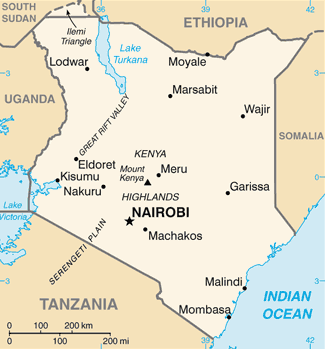
Having recently moved to Kenya to establish ID's first international office, I am often asked by friends, family, and colleagues a simple question, "Why Nairobi?” My answer is often just as simple, "Because Nairobi is positioning itself to become the Silicon Valley of Africa."  What isn't so simple is the justification behind such a claim.  So I'd like to take a crack at explaining exactly why and how Nairobi is rapidly forming into a vibrant and compelling startup hub. 

In Paul Graham's essay "How to Be Silicon Valley," he mentions there are three factors needed to replicate Silicon Valley:  Rich People, Nerds, and the right Environment.  The Rich People have the money and, ideally, the expertise to mentor and seed the Nerds, whose ideas are the foundation upon which companies are built. Graham argues that it is the interplay between these two groups, in a supportive environment, that drives high growth startups.  If a city can duplicate that, he says, then any city can be Silicon Valley.
Check back tomorrow to read about "The Rich People" and why they're important.

#CleanTechThatMatters is on December 14th. 
Follow us on Twitter.

Thursday, December 1, 2011

Poverty-Fighting Mobile Transaction Systems (Part 4): Social Capital

This is the fourth post in our series, “Leveraging Mobile Penetration at the BoP for Poverty-Fighting Mobile Transaction Systems.” Click the links below to catch up on anything you might have missed.
Social Capital - Networking and Participation
As we introduced in the first post, the key to a successful mobile technology applications to alleviate poverty is the exchange. In the case of networking and participation, an exchange is the receiving and sending of ideas and opinions and the power to organize or participate in the community.

Mobile phones create powerful social networking opportunities. Mobile applications can offer users the opportunity to leverage their networks for referrals and create opportunities for peer lending.  Social networking tools, everything from SMS to Facebook, facilitate organization and participation, as we witnessed during Egypt’s Arab Spring Revolution. Leveraging mobile ubiquity to expand on social capital reaps many benefits for users in a community where communication tools are limited.  

The mobile phone with its most basic feature, SMS, promotes impact by creating an exchange. NGOs and governments around the world have used SMS texts to inform and alert populations to serious alerts. For example,  FrontlineSMS and Jana (both discussed in this Weekly Review) allow businesses and NGOs alike to communicate with their target market in developing countries. FrontlineSMS prompts consumers to participate and engage through a platform that allows NGOs and businesses to send group texts, asking questions and opinions to a large mobile user base.  Similarly, Jana (formerly Txteagle) collects market research data with mobile phones by allowing businesses and NGOs to distribute surveys via SMS with promotional incentives.

Tying It All Together - Mobile Ubiquity and Reducing Poverty
It is clear that mobile phones provide many benefits to users at the base of the pyramid. In the United States we have access to such benefits and resources not only through mobile phones, but by many other mediums. We can network on LinkedIn, search for jobs on Monster, read reviews of local service providers on Yelp!, take surveys to get coupons, borrow from a bank, use and build credit, and transfer money in seconds on our online banking applications. While some may argue that these seem to be simply promoting consumerism, the key point to highlight once more is the exchange. To reiterate Dr. Harish Hande’s philosophy, we must allow the poor to create their own wealth by giving them the tools to do so. With a mobile phone at the fingertips of over 70% of the world and a growing community of social innovators, we can create mobile technologies for sustainable global development.

What other ways can we leverage mobile ubiquity to create poverty-fighting technology? 

Thursday, November 17, 2011

Can Lagging Ethiopia Reach African Mobile Penetration Standards?

Source
Adding 55M
Ethiopia is infamously lagging behind the African standard of mobile penetration rates. Currently, mobile penetration in Africa is around 50% and climbing, but Ethiopia’s mobile penetration is around 12%. The Government of Ethiopia, who controls the telecommunications industry in the country, has set some ambitious goals for the next five years to increase mobile penetration rates. While there are many benefits that come along with a mobile phone in the hands of the poor, here at ID, we’re wondering if Ethiopia can achieve their lofty goals. We looked at a few factors to find out if lagging Ethiopia can reach African mobile penetration standards, and it looks like it is possible.

Goals
The Ministry of Finance and Economic Development detailed its five-year strategic goals in Ethiopia’s Growth and Transformational Plan (GTP). To achieve the goal of 75% penetration by 2015, 65 million Ethiopians must have mobile phone subscriptions. It is important to note, however, that Ethio Telecom, the state-led telecom, wants to reach 65 million subscribers while maintaining a government monopoly over the industry.

Considerations in Ethiopia’s Favor
Many political and circumstantial indicators point to Ethiopia’s ability to reach 65 million mobile phone subscribers. Research by the Economist Intelligence Unit indicates that the underlying political climate is stable and should prove accommodating to telecommunications expansion (2008). Additionally, the US will continue to invest in Ethiopia to enjoy strategic advantages that come from the country’s proximity to Middle East and North Africa. China, Ethiopia’s dominant foreign investor, also has strategic benefits to gain from investing in the country to promote its global image. Relatively conservative predictions of 7.5% real GDP growth imply more than enough government revenue to afford the necessary capital expenditure (Lake & Walker, 2011).

Cost of Development
In order to determine if the government’s goal is feasible from a financial standpoint, we must understand if planned government expenditure can meet the cost of development. We estimated the cost of development by multiplying Ethiopia’s goal number of new subscribers (55 million) by the average capital expenditure necessary per subscriber in Africa. Public data from five operators (MTN, Vodacom, Orascom, Zain, and Vodafone) covering 16 African countries and over USD$5 billion in capital expenditure suggests an average cost per new subscriber of USD$32 per person (rounded towards the worst-case scenario). Based on that data, going from 10 million to 65 million subscribers in five years will require USD$1.76 billion in capital expenditure over the same period.

Government Expenditure
Assessing the government’s ability to pay for this infrastructure requires as estimation of expected values for GDP, tax rates, percent of government spending on capital expenditure, and percent of infrastructure spending on telecommunications.
Spending Capacity
=
5 Year GDP x Tax Rate x CapEx % of Budget x Telecom % of CapEx

Five-Year Estimates
  • Total GDP: Ethiopia will generate USD$180 billion in GDP over the next five years (World Bank, 2011; Lake & Walker, 2011)
  • Government Revenue: Collecting 15% of total GDP yields USD$27 billion in taxes (African Economic Outlook, 2011)
  • Capital Expenditure: Spending two-thirds of revenue gives USD$18 billion for development (African Economic Outlook, 2011)
  • Telecommunications: Allocating 10% of infrastructure spending to telecommunications leads to USD$1.8 billion in expected expenditure over the next five years (Foster & Morella, 2010).

An Attainable Goal?
Based on our analysis, reaching the additional 55 million subscribers will cost USD$1.76 billion while telecommunications expenditures should reach USD$1.8 billion. Though the numbers are a bit rough, Ethiopia could theoretically have enough money to reach its goal.

Speculation that the government’s state-led development model hinders potential mobile penetration growth is justified. Nonetheless, the country reached their interim goal of 10 million subscribers in July of 2011 (Ethio Telecom, 2011) thanks to a $500 million loan from the Chinese government. Our analysis did not consider external funding but even with our conservative estimations indicate that the Ethiopian government could achieve its ambitious goal.

High penetration rates in Ethiopia will open many new opportunities for mobile transaction technologies to fight poverty, but it’s just the first step. State-run entities are often capable of building larger scale infrastructure but lag desperately behind the free market. The government can provide the infrastructure, but will need the private sector’s participation for value-added services like mobile money and information exchange. Will the government allow the private sector to participate? Time will tell.

Works Cited:
African Economic Outlook. (2011). Ethiopia Report. Issy les Moulineaux, France: OECD Development Centre. Retrived from http://www.africaneconomicoutlook.org/.
Economist Intelligence Unit. (2008). Country Profile: Ethiopia. Kent: Patersons Dartford.
Foster, V., & Morella, E. (2010). Ethiopia’s Infrastructure: A Continental Perspective. Washington, DC: The World Bank.
Lake, J., & Walker, P. (September 2011). Country Report: Ethiopia. London: Economist Intelligence Unit.
The World Bank Group. (2011, October 10). World Bank Data. Retrieved from http://data.worldbank.org/
Yamamoto, D. (2007). Ethiopia: Telecommunications Sector Update. Addis Ababa, Ethiopia: Embassy of the United States.

Tuesday, November 15, 2011

Poverty-Fighting Mobile Transaction Systems (Part 3): Information Exchange

This is the third installment in our series on mobile transaction systems and their contribution to the fight against poverty. First, we introduced this series with an overview of mobile penetration rates and the mobile phone’s power for impact. Then, last week, we highlighted the first transaction system - mobile money - and the benefits such transactions offer to users. This week, we will look at the different ways mobile phones facilitate exchanges of information and how they benefit the users.

Information Exchange
Mobile phones can provide information to the otherwise isolated citizens at the base of the pyramid. When mobile phones facilitate the exchange of information, this has perhaps the most wide-ranging impact on its users.

For Farmers
Source: http://www.grameenfoundation.org/
The ability to access information about weather and prices leads to make or break decisions for farmers. To facilitate quality access, organizations like the Grameen Foundation have developed schemes that allow poor farmers in Uganda to gain access to valuable market data. This empowers the farmers by granting them access to information about market prices, weather reports, and planting advice. Without the data and information, farmers can suffer costly losses that would be preventable with timely knowledge. A designated “community knowledge worker” (CKW) identified by Grameen collects information from farmers and uploads it to the database for other CKWs. This sort of data collection and information sharing is hugely empowering, but it’s impossible without access to a mobile phone. Other examples of organizations seeking to fill this gap are mFarm, iCow, and Esoko

For Job Seekers
Source: http://www.assuredlabor.com/
There are transaction systems that have revolutionized the job and talent searches in the developing world. As more corporations are moving into emerging markets, they need to source and hire talent. Mobile transaction platforms like Assured Labor (branded as Empleo Listo, think of Monster on SMS), allow companies to access potential employees on existing channels – mobile phones. On the other side, users can search for job openings on their phones. This enables users to find local jobs and avoid emigration where possible. This platform is especially advantageous for those who do not have access to traditional Internet on a PC, where most jobs are posted.

The mobile phone creates opportunities in markets that are beyond the reach of a traditional laptop.  You’ll find farmers and job seekers in all populations, but continued innovation in mobile technology can further extend the benefits of information exchange on a mobile phone.

Check back next week for examples of networking, participation, and social capital exchanges made possible on mobile phones.

Friday, November 4, 2011

Weekly Review October 30 – November 5


This week, we’re stepping back and looking at the explosive developments in the ICT industry and their effects in emerging markets.  In case you missed it, check out our ongoing series on how mobile transactions systems can fight poverty, Part 1 and Part 2.
Image Courtesy of SlimTrader
Ethio Telecom launches credit transfer service” Press Release from Ethio Telecom
Ethiopia is infamous for its lagging mobile penetration rates. The Government-led telecom released ambitious goals for mobile penetration last year. So far, it seems that the country is on target to meet them. Last week, Ethio Telecom announced that it would now allow prepaid users to transfer airtime to one another, an early version of mobile money. Airtime is like a currency in emerging markets, and we’re excited to see this type of development continue in Ethiopia.

With over 14 million customers signed up since its March 2007 launch, Safaricom’s M-Pesa is processing more transactions in Kenya than Western Union is in the entire world. M-Pesa provides mobile money services to more than 70 percent of Kenya’s adult population, according to the International Monetary Fund. M-Pesa has revolutionized the way Kenyans transfer their money, moving about 17% of the country’s GDP each year.

In Zimbabwe, mobile phone penetration has begun to significantly contribute to levels of entrepreneurship in the country. A report from the United Nations Conference on Trade and Development revealed,“59% of Zimbabweans have access to mobile phones compared with only about 5% in 2005.” The UNCTAD pointed out that Zimbabwean SMEs are using mobile phones regularly to conduct business and m-commerce. The Government of Zimbabwe indicated that m-commerce has been a significant economic driver. In addition to mobile penetration, phones with mobile Internet are always increasing; in Arica, “7 out of 10 are expected to be Internet-enabled by 2014.”

UN Team Approves ICT Goals As EA’s Speed Lags” by Esmond Shahonya on All Africa
The UN’s Broadband Commission for Digital Development has endorsed new targets that aim to provide global broadband access. The first target requires all countries to have national strategies for implementing universal broadband access. Furthermore, broadband access must be affordable. The final target aims to provide broadband access to 40% of households in developing countries by 2015. The goals were developed at the International Telecommunication Union (ITU) Telecom World 2011 summit, which considers “broadband as a vital ingredient for development.” 

Follow us on Twitter
Go from Idea to Enterprise with BETA

Thursday, November 3, 2011

Poverty-Fighting Mobile Transaction Systems (Part 2): Mobile Money Transactions

Last week we introduced this series that will highlight the different ways mobile phones can combat poverty. This week, we will discuss the first example of a poverty-fighting mobile transaction system. Mobile money transfer services provide financial inclusion benefits for the unbanked, and are the most heralded impact of mobile penetration.

Mobile Money Transactions
Perhaps the most well-known mobile transaction systems that engage the base of the pyramid are mobile money transactions. The various flavors of mobile money transactions (mobile payments, m-wallets, mobile banking, etc.) have revolutionized the way users send and receive money throughout emerging markets, bringing millions of previously unbanked users closer to full financial inclusion.

Safaricom’s M-PESA, the golden beacon of the mobile money industry, set a standard in Kenya that others are trying to follow. The telecommunications company released its mobile money service in March 2007 and currently has 14 million users in Kenya alone. Today, nearly 17% of Kenya’s GDP flows through M-PESA, even though many of these users do not have bank accounts. The resounding success of M-PESA has sent a message across the globe. There is tremendous demand from the unbanked for financial efficiency and cashless transactions.

Inspired by the success of M-PESA, others are quickly joining the movement. Competing telecommunications companies from Manila to Mexico have created similar models and even banks are deploying mobile payments with branchless banking models to serve the rural poor. Whatever the approach, mobile money transactions give the unbanked the opportunity for financial inclusion, including secure, cashless financial transactions. In most cases, users can transfer money, and pay bills with a simple and secure text message, or deposit/withdraw cash at any participating agent.

There are also less obvious benefits that come from the growth of mobile money transactions. Agents, who are usually small shopkeepers, enjoy increased revenue streams and increased customer presence in their stores. Because the money is “e-float” and not cash, the risk of funds being lost or stolen decreases significantly as well. 

Image Courtesy of Simpa Networks
However, for real financial inclusion, mobile transaction systems are going to have to expand their services beyond simple cashless transactions. Some of this is happening already. For example, Safaricom recently partnered with Equity Bank to develop M-KESHO in Kenya, a product that provides M-PESA users with interest bearing mobile savings accounts. Another example comes from Simpa Networks, an ID portfolio company that leverages mobile technology to finance the costs of solar home systems. The Simpa Regulator allows users to make payments with their mobile phone to pay off the cost of the system over time. In this way, mobile transactions can expand one of the most important aspects of financial inclusion, credit.  

Check back next week for examples of information exchanges made possible with mobile phones. 

Monday, October 24, 2011

Poverty-Fighting Mobile Transaction Systems (Part 1): Leveraging Mobile Ubiquity at the BoP

The ID team spends a lot of time discussing and studying the mobile technology industry. The driving force behind our focus on mobile technology in emerging markets has been the explosive growth of mobile phone penetration rates and the potential for mobile transaction systems to reduce poverty.

Our most popular post on this blog is “Mobile Phones at the Base of the Pyramid: Accessibility and Affordability” published in June 2010. In that post, we outlined why mobile phones matter, citing examples of connectivity and mobile access increasing income at the bottom of the pyramid. Since then, we’ve narrowed down our focus even more. Every day we learn about new mobile transaction systems and applications that change the way people at the base of the pyramid live and work.

Over the past few years we have learned that the key to mobile transaction systems is the exchange. As Dr. Harish Hande, founder of SELCO-India and the winner of the 2011 Ramon Magsaysay Award said in his keynote speech at ForSe2011, the poor must be “asset creators”. It’s not just about selling to the BoP, it’s about letting them sell to us as well. This means that when we drive products, information, thoughts, and opinions to the BoP, we should allow the flow to be reciprocated. Everything that flows “down” must flow back “up” for a sustainable cycle. This includes money, information, and social capital.

In that 2010 post, we also looked at the demonstrated market growth for mobile phones.  We consistently monitor the penetration rates of mobile phones in emerging markets. The World Bank Database is a reliable resource, currently offering data through 2009. Based on that data, we projected the penetration rates for 2010 and 2011(using a conservative diminishing returns formula for the falling year-on-year growth averages). The chart below shows the number of mobile phone subscribers per 100 people in Latin America & the Caribbean, India, and Sub-Saharan Africa. We compared these three emerging market regions with the United States, the European Union, and the world as a whole. 


Mobile Subscriptions per 100 Inhabitants
Even at slowing growth rates and our conservative estimates, we can see that access to mobile technology in the developing world has increased tremendously over the past decade. Now, social entrepreneurs are leveraging these high penetration rates to create businesses and wealth that enable sustainable development. Muhammad Yunus, Nobel Peace Prize winner and founder of Grameen Bank, famously said: ”When you get a mobile phone it is almost like having a card to get out of poverty in a couple of years.” There are a variety of tools, applications, and services that mobile technology provides to empower the BoP and, here at ID, we strive to understand each of them.

Over the next few weeks, we will post the different examples of mobile transaction systems and the ways they empower the world’s poorest citizens by creating exchanges.  Up first on the agenda is Mobile Money Transactions, check back next week for the first examples. 


Update:
Part 2 - Mobile Money
Part 3 - Information
Part 4 - Social Capital

Friday, October 21, 2011

Weekly Review October 17-21

Source: Wikimedia Commons
This week we’re highlighting the importance of enterprise level development and impact investing in India. Several newsworthy excerpts describe the myriad opportunities emerging from the growth of social enterprises, impact investing, and the use of technology in the region.

Could impact investing help India’s poor” by Shilpa Kannan on BBC News, Delhi
A massive existing population in India coupled with robust economic growth expectations and a changing investor appetite for disruptive innovation in emerging markets has driven growth in social enterprises opportunities. Impact investors are seeking cutting edge local entrepreneurs and business innovators in India for the development of the region. In late 2010, JP Morgan was one of the first to formally acknowledge that this sector is more than an emerging trend but rather a unique and emerging asset class all its own, a notion that supports the Times of India Social Impact Awards.  As the article reports, it is becoming increasing clear that the potential and support for impact investing in India is huge. This investment class is both a solution for the risk-averse private sector and compliments the already exhausted resources coming from many governments and donors.

The Indian government is buying £30 tablets, the “Aakash,” from a British manufacturer, DataWind. The government will use the tablets to supply rural schools and universities with modern technology “to help lift villagers out of poverty.” This is an effort to get 220 million children of India online and close the gap between the burgeoning rich and the underserved poor. Currently, “only 7% of Indians graduate from high school” and the government aims to increase enrollment to 30% by 2020.  DataWind tablets enable teachers to access important teaching resources and give students a taste of technology.

“Just as many [governments] in developing countries skipped landlines and went straight to mobile phones,” many developing countries will also skip coal and go straight to clean energy. Clean technology and alternative energy sources are the competitive choice for under electrified countries in emerging markets. Especially in India, where the population is so large, the benefits of clean and safe energy sources will be significant. For example, there are about 2.5 million burn cases in India alone each year due to the use of kerosene lamps. Also in India, solar panels are priced around $300, the equivalent of a year’s supply of kerosene. Strengthened with innovative financing solutions like the Simpa Regulator Simpa Networks, India may reach its goal to produce 15% of its total energy from renewable sources by 2020. With the support of the public sector and the private sector, the second most populous country in the world can electrify the country with sustainable solutions.

Aavishkaar, a Mumbai-based venture capital firm, has raised a new $62 million fund that will focus on early-stage firms serving the base of the pyramid in India. In a similar fashion to Invested Development, Aavishkaar India emphasizes the importance of solutions that are affordable and scalable. The fund will serve a wide range of industries in India, including: healthcare, water and sanitation, education, agriculture, and renewable energy. VineetRai founded Aavishkaar in 2001 with the vision of enabling and harnessing the entrepreneurial spirit found at the base of the pyramid to promote sustainable and self-sufficient economic development.

Follow us on Twitter
Learn more about BETA 

Friday, October 14, 2011

Weekly Review October 10-14

A cornerstone of Invested Development’s strategy is that mobile phones facilitate information, participation, and transactions in emerging markets.  This week’s articles demonstrate examples of how mobile phones can do so.

Mobiles: The Hub of a Global Information Society” by Melissa Ulbricht on Mobile Active
Like us, Mobile Active is a proponent of the basic feature phone’s potential for impact by distributing information. A new report, “News on the Go: How Mobile Device Are Changing the World’s Information Ecosystem” by the Center for International Media Assistance (CIMA) discusses and examines how the implications that mobile penetration has for politics, education, economies, society, and most importantly, the global disbursement of news and information. The report focuses on smartphones, but Mobile Active smartly lists a collection of case studies focused on more basic phones. Both smartphones and more basic phones create opportunities as Mobile Active and CMIA demonstrate in their publications. Check out the Mobile Media Toolkit for case studies focused on basic phones and download the CIMA report to get a sense of the impact, no matter what kind of phone.

Reach the Next Billion Through Mobile” by Grant Tudor on Next Billion
Nathan Eagle, a local MIT professor and co-founder and CEO of Jana, was profiled in The Economist in January and more recently in Next Billion as a “radical innovator capitalizing on the rapid and broad-based distribution of mobile technology.” Jana, formerly Txteagle, is a mobile-phone-based platform that allows global organizations to reach and engage consumers in emerging markets. Jana has Research and Marketing arms across 80 developing countries, allowing consumers to actively participate and leverage their own influence over the market. Jana allows businesses to collect data on the wants and needs of their target markets at the BoP by distributing surveys on mobile phones and offering a promotional incentive for doing so. In the case of Jana, mobile phones change the way we look at and do business with BoP markets.

The African Laptop Killer: Android and the Developing World” Claire Hunsaker’s presentation at Android Open 2011

Claire Hunsaker, Director of Marketing and Client Services at Samasource!, presented at the Android Open 2011 on mobile ubiquity’s impact in Kenya. Claire discusses how the ubiquitous presence of mobile phones contributes to the lifestyle of everyday Kenyans.  Notably, cheap Android phones called “Kenya phones” are slowly rising in popularity in the market. Most importantly, she points out that 99% of new-paying Internet users access the web on their mobile phones.  Hunsaker and Samasource!’s work focuses on the use of mobile phones for information, payments, and networking. This is a philosophy we share at ID. For example, the Mobile Media Toolkit and the Open Data Kit, accessible on a mobile phone, promote citizen journalism. For more examples on how information distribution is made possible through mobile phones in addition to payment and networking opportunities, watch her whole presentation and follow Samasource! on Twitter.

A powerful combination: Radio and SMS promote open dialogue in Chad and Niger” by Prairie Summer and Lucy Lyon posted by Ken Banks of National Geographic Emerging Explorer on National Geographic News Watch
Prairie Summer and Lucy Lyon of Equal Access International (EA) leverage the technology developed by FrontlineSMS to educate and empower the BoP through media and community mobilization. That is to say, with mobile technology, they facilitate participation and information transactions. FrontlineSMS is a valuable tool for NGOs that allows group texting and two-way communication on a large scale. EA hosts six radio programs in Chad and Niger and communicates with its listeners using the FrontlineSMS technology.  This allows the listeners to participate, share their views, and get their questions answered using a tool that is readily available. Check out the article to read first-hand accounts of user participation.


Follow us on Twitter
Learn more about BETA

Friday, September 30, 2011

Weekly Review September 26-30

People often ask us why we chose technology as our investment focus. The answer is quite simple: technology has the greatest potential to create impact in the developing world. The following articles for this week share our sentiment and speak to mobile technology’s power for social impact (be sure to check out next week’s Review to see how alternative energy is creating impact).

Source
Mobile Broadband in Kenya” by Patrick Munyi on iHub Blog
Kenya has been the shining star of mobile technology innovation in Africa, largely fueled by high mobile penetration and the installation of undersea fiber cables in 2009. The folks at iHub Nairobi have collected data regarding mobile technology and mobile broadband usage in Kenya.  They have found that broadband speeds are increasing alongside the number of users and that most access the Internet with their phone; “98% of mobile subscribers use mobile internet.” More important are the affects mobile Internet will have on the Kenyan economy. iHub writes, “It is predicted that mobile broadband can potentially increase national productivity and growth by up to 15%.” Access to mobile phones, and therefore mobile broadband, will made a significant improvement in the continued development of Kenya.

 “Crises in the Digital Age” by Michael Fertik, CEO and Founder of Reptuation.com, on World Economic Forum Blog
Michael Fertik reflects on the attitude world leaders had on Internet at the World Economic Forum in Davos this year. All agreed and wanted to know more about how the Internet “spreads information, misinformation, rumor, innuendo, and fact.” While the Internet can cause a stir, the information it channels to underserved populations is critical. Fertik writes of the impact the Internet has in times of crisis or disaster. We agree that technology creates impact by absorbing and transmitting information, and add that it doesn’t just have to be in times of crisis.

Katrin Verclas, founder of MobileActive.org, has been honored as one of the most influential women in technology this year. Her site is a “hub for people around the world who are building tools for mobile phones that make a difference.” Her site unites the large community of technology innovators who are working to create technologies that empower the world’s underserved populations. This way, innovators can share their experiences and expertise to create affordable and scalable products and services for the underserved. By promoting the development of applications and mobile technologies, we can leverage mobile ubiquity to create social impact. Congratulations to Katrin Verclas and thanks for propelling the technology for impact space forward.

It’s not just small social enterprises that have caught on the potential at the BoP and technology’s power for impact. The IT giant Hewlett-Packard (HP) is expanding its operations in Africa with 10 new entities throughout the continent. Business customers, governments, and individuals will have improved access to HP’s hardware and software. Governments especially will be able to leverage HP technology “to drive economic growth by modernizing the delivery of services in key areas such as education, healthcare, and e-Government services.” By penetrating the market, HP will drive increased adoption of technology and promote sustainable economic development. HP’s presence alone will create jobs and stability throughout their communities. HP also has plans for many other initiatives to collaborate with universities, innovate in African education and extend social innovation programs.

Follow us on Twitter
Like us on Facebook
Bring your idea to enterprise with BETA