2

Our blog has moved!

3

You should be automatically redirected in 6 seconds. If not, visit
http://investeddevelopment.com
and update your bookmarks.

4
Showing posts with label solar energy. Show all posts

Friday, January 6, 2012

Weekly Review January 1-7


Since we wrapped up the year with a Weekly Review on Africa’s prospects for prosperity in 2012, this week we’re taking a look at India. In renewable energy news, the common trend is the focus on India – this week was no exception. We think (and it seems the media agrees) that the clean tech industry will present significant opportunities for investment and development in India.

Photograph: Rafiq Maqbool/AP via The Guardian
 Rural India Turns to Solar Power” by Sonia Narang on PRI’s The World NPR
India enjoys over 300 sunny days each year. Business solutions are increasingly allowing residents in rural, off-grid areas to take advantage of this renewable and natural resource. This article illustrates a simple example of how lighting extends working hours for a rural Indian silk farmer, and increases his productivity and income.

Solar ATMs Bring Change(s) to Rural India” by Jaymi Heimbuch on TreeHugger
An interesting intersection of solar energy and branchless banking, rural India is highly receptive to solar-powered ATMs. Vortex Engineering (whose tagline is “helping banks reach out”) created a solution called “Gramateller” (gram meaning “village”). A Gramateller requires just five hours of sunlight a day to keep the solar ATM charged. The State Bank of India bought 400, allowing for the disbursement of government payments in remote areas.

How solar power can help the billion people without electricity” by Carl Pope on The Guardian Environment Network
Following last month’s Durban climate change talks, the mainstream media is catching onto the demand and need for renewable energy in emerging markets. Even better, news stories are also capturing the benefits of energy’s contribution to poverty reduction. The Guardian highlights “pay-as-you-go” business models, as Simpa Networks is making famous, for their hand in moving the adoption of clean, reliable energy forward in India.

CleanTechnia assesses forecasts from Pike Research, determining that the future is bright in emerging markets. In India particularly, solar is now cheaper than diesel. Research shows that the declining cost of solar will promote distributed energy and rural microgrids. Most importantly, CleanTechnia acknowledges that private investment will “help spur growth and demand” and push the adoption of innovative energy infrastructure, accelerating economic development. 

Follow us on Twitter.
Like us on Facebook 
Learn more about BETA

Friday, June 17, 2011

Weekly Review June 13-17

Every week at ID we read articles about what we do and what we like. This week we read a lot about innovation in energy.

Rogers received the Prize for his work in technology contributing to human health and, related to our investment focus, the commercialization and increased scalability of photovoltaic solar power. Rogers has worked in photovoltaic solar, converting solar light to electricity. Rogers co-founded Semprius, a company that develops low cost, high performance “CPV modules to make solar power generation economically viable in sunny, dry climates.” Through a partnership with Siemens, Rogers scaled his system to make power affordable and economical in sunny areas, ideal for use in emerging markets throughout Africa and South America.

The Western Cape of Africa holds a promising future in clean energy. Last year, the Western Cape Environment Minister “received applications for installation of over 11,000 Megawatts (MV) of wind energy generation capacity.” Unfortunately, these privately-funded, market-driven initiatives face many delays due to the unnecessary bureaucratic delays and obstacles. The national energy policy has been topic of political discussion for many years, due to the massive economic and social costs that the poor energy system is imposing on South African citizens.  New government policies encouraging energy diversity, like finalized versions of the Integrated Resource Plans (IRPs), would open the door to market-driven energy solutions and improve the South African economy at all levels.

d.light’s newest solar lantern is available for only USD$8, offering an excellent alternative to typical kerosene lamps. The S1 lantern is healthier, more energy efficient, and more affordable than kerosene. A day’s charge in the sun provides four hours of bright light after dark, adding precious hours of lighting in the homes of millions across Asia, Africa, and South America. Consider the effect of the added hours of safe light for a student. A student can now study at night after their daytime duties are completed. This increased productivity will allow for more hours of studying and a better performance in the classroom, all thanks to innovative technology in solar energy.

image via ViewChange and NextBillion
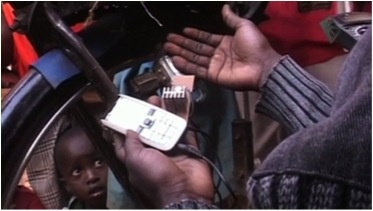
NextBillion featured a video on its blog from ViewChange that produces educational and inspirational videos from the developing world. The featured video demonstrates an innovative solution for charging mobile phones in rural, where much of the country lives in energy poverty. Inventor Pascal Katana has created a way to charge phones using energy generated from a bicycle with an easy-to-use smart charger. The charger “costs about 350 Kenyan shillings, which is about USD$4.” Visit the link to watch the video.

According to the evWind blog, the Infrastructure Development Company is funding 993,000 Bangladeshi residential solar units, totally 5 million for the country. The IDC is aiming to power 2.5 Bangladeshi homes by 2014, far exceeding the number in the US. 


Follow us on Twitter
Like us on Facebook
Learn more about BETA

Thursday, May 19, 2011

BoP Pricing Models

Social entrepreneurs face many challenges: finding the right impact investor, working with government regulations in emerging markets (or lack thereof), meeting the needs of citizens at the Base of the Pyramid, designing products and services that are profitable and scalable. Most importantly, social entrepreneurs must make their products and services affordable. The world’s poorest citizens have no savings and little access to formal credit, but that is not to say that they do not have purchasing power. Their individual spending may be small, but combined it is largely powerful. However, the problem for individuals is the large, up-front commitment to a purchase is close to impossible for those who earn an irregular and inadequate income. Even if the purchase will pay for itself after a period of time, it’s simply not feasible for the world’s poorest citizens. This post looks at pricing models that work and serve the BoP in ways that directly meet their needs. It’s not enough to simply have a well-designed product with good intentions. Social entrepreneurs need to create innovative pricing models.

In a report from Monitor, “Emerging Markets, Emerging Models,” Karamchandani et al. introduce the example of an Indian company, Servals. Servals designed a kerosene lamp that was more efficient, safer, and would “pay for itself after about two months.” However, to everyone’s surprise, sales were way below forecasted estimates. Customers at the BoP don’t have disposable income to “invest,” even if it will save them money in the long run. After a redesign of the product that allowed for a lower retail price, sales increased significantly to over one million units by 2008 (p. 11). This is one option for social entrepreneurs: simply redesign the product so it is more affordable. In the Monitor report, the authors outline seven different pricing models that “have the best chances of success,” (p. 7) determined after a multi-year extensive research project in emerging markets.

Serval lowered the price of their product with a cheaper design. But what if the product’s price can’t be lowered any further? The price of solar power, for example, deters many middle-class consumers even here in the US, so how can citizens at the BoP afford it? Simpa Networks developed an innovative pricing model to resolve that exact problem. Simpa designed its pricing model to be the same price as what many would spend on kerosene lamps. Instead of inefficient kerosene lamps, Simpa offers modern, small-scale solar home systems made affordable by allowing consumers to pay-as-they-go. The systems include “a solar panel, battery, charge control, at least 3-4 lighting points, a mobile charging port and power for charging or powering small DC devices.”
A "top up" card 
The orange box is Simpa's "Regulator"
Photo from Miguel's Site visit in India
Simpa has designed a built-in “Regulator” that turns off the power until a consumer makes the required payment. Modeling the payments after the ubiquitous “top-ups” offered by mobile phone networks ensures that users are familiar with the process. Once the cost of the solar home system has been fully paid (at the customers’ own pace), the system will deliver electricity at no further cost for “the expected 10-year life of the product” and becomes a true asset.

Simpa's "Radical Affordability" Model
This pricing model is based on “radical affordability,” which Simpa defines across three axes: “the initial purchase price, the total cost of ownership, and the flexibility of expenditures over time.” Simpa’s model of radical affordability is one solution to the pricing model problem that entrepreneurs in emerging markets face. This post is the first of many that will highlight examples of companies that are practicing effective and innovative pricing models that best serve the BoP. For even more examples, check out “Emerging Markets, Emerging Models.”

by: Christina Tamer
Follow us on Twitter
Like us on Facebook

Friday, February 4, 2011

Weekly Review for January 31-February 4

Every week at Invested Development we scan the web for articles that relate to what we do and what we like. This week we read a lot about mobile technology in emerging markets, new applications for homeowners to monitor energy use, solar energy, and social entrepreneurship. 

Using Mobile Manners” by Abby Callard
In their latest post, Beyond Profit discusses the ways entrepreneurs are using the growing number of mobile phone users to create services that benefit the poorer consumers in emerging markets. A study in Gambia indicated that “cloud phone” services will benefit users in rural areas, where 86% of customer share their phones. Movirtu is credited for the “cloud phone” concept, allowing users to access their own prepaid phone service and account from any phone. The study points out differences in mobile habits between rural and urban users, helpful for social entrepreneurs looking for opportunities in mobile technology.

GOOD recently wrote about three applications that will help homeowners manage how much energy these use:  Microsoft Hohm, Google PowerMeter, and Tendril. The applications offer different ways to track, automate, and recommend ways to reduce energy usage.

Hewitt is the Director of Social Entrepreneurship at Toronto-based MaRS, “a convergence innovation centre,” where she has implemented a Social Innovation Generation team. MaRS supports entrepreneurs in the areas of “information technology, clean tech and social innovation” working towards “systemic, sustainable, social change.” Check out her post to read her inspiring vision for social entrepreneurship in 2011.

The Gates Foundation and USAID introduced The Haiti Mobile Money Initiative in June 2010 alleviate the devastation and to enable the mobile money industry. Mobile money allows for the safe and speedy delivery and transfer of cash, enabling humanitarian agencies to act faster and more efficiently.  Now, there are competing partnerships among Haiti’s prominent banks and phone operators.

A reflection on the process of “going green” in everyday households, Grover debates the downsides of solar energy. He relates that the solar feed-in tariffs in the UK are enticing everyday homeowners to invest in solar energy. Most importantly, taking the step and going solar changes the relationship people have with their energy. They are now much more aware of when it is produced and how much can be and is used.

The Acumen Fund pays homage to Husk Power Systems in their latest blog post. HPS works to deliver electricity throughout rural India. Not only does HPS work to alleviate poverty, the organization improves the lives of their employees. HPS provides their employees with health insurance, professional training to build long lasting skills, credit services, and a career to break the cycle of poverty.  

Friday, January 28, 2011

Weekly Review for January 24-28

Every week at Invested Development we scan the web for articles that relate to what we do and what we like. This week we read a lot about… well, we read a lot.  

Greetings from Davos, Switzerland” by Neal Keny-Guyer
This week the World Economic Forum is meeting for the annual discussion of the world’s economy in Davos, Switzerland. There are a lot of issues on the agenda this year, but especially interesting are Environmental Sustainability and Social Development.  In the Mercy Corps Blog, CEO Neal Keny-Guyer writes from Davos about the necessity of investing in emerging markets. “Forward-thinking companies” can save and rebuild devastated communities like Haiti and South Sudan. Emerging markets, he says, are ideal for social innovation and calls for heightened investment, “especially in the use of mobile technology for development, energy, and water.”

SolarPrint combines solar energy and wireless sensors in dye-sensitized solar cell (DSSC) technology. The Dublin-based photovoltaic tech company “allows electronics to gather power from any light sources.” Potentially reducing the need for batteries, SolarPrint’s new solar energy technology can be used in most electronic devices.

In Davos, Switzerland, the world’s most influential people are discussing world economic growth for 2011. The IMF predicts that African economic growth with be above average for 2011 and that Asia will continue to have an effect on African growth. Wallace at ONE hopes that those at Davos will discuss Africa’s potential and ways to end the widespread poverty.

The benefits of mobile technology are popping up all over the world. A social innovation, mobile payments in India allow users to manage their money. Moving forward, the key to a successfully functioning system will be interoperability and utilizing existing regulated systems.

Just like Invested Development, another early-stage funding firm called Northwest Energy Angels is investing in clean technology. Investing $1.3 million last year, Northwest Energy Angels contributed to the industry growth in the US, especially in the Northwestern region.  

Eight trends in social entrepreneurship to watch for in 2011” by Tamara Schweitzer
2011 is a promising year for social entrepreneurship. Schweitzer’s first point emphasizes the importance of seed funding and impact investments. Social entrepreneurship is finding its way into international and academic circles and is reaching younger generations.

As MIT celebrates its 150th anniversary, the MIT Global Challenge brings social innovators together here in Boston. 

Unreasonable Institute Challenges Its 45 Finalists to Raise $200,000 from 1 Million People in 50 Days
"Entrepreneurs from over 60 countries vied for the 25 slots available to attend the 2011 Unreasonable Institute. After conducting over 100 interviews, the Unreasonable team has narrowed it down to 45 exceptional finalists. Now, in a true test of their entrepreneurial mettle, each of these finalists face one final challenge before becoming Unreasonable Fellows: galvanizing the globe to raise the $8,000 it costs to attend the Unreasonable Institute. The first 25 finalists to raise $8,000 will be chosen to attend. And the decision lies in your hands. Head to the Unreasonable Institute’s Finalist Marketplace and join one million people across the globe and vote with your dollars for an entrepreneur you believe might change the course of history."


Be sure to follow us or add us to your Reader to keep up with the latest trends in social entrepreneurship and investment.