2

Our blog has moved!

3

You should be automatically redirected in 6 seconds. If not, visit
http://investeddevelopment.com
and update your bookmarks.

4

Friday, December 9, 2011

Weekly Review December 3-10

In honor of our upcoming event, Clean Tech That Matters, it’s only appropriate to report on articles discussing clean tech and alternative energy opportunities in emerging markets. Anytime you can get a group of ambitious techies, entrepreneurs, and investors in the same room, seeking extraordinary innovations in a time of favorable policy developments and continued market growth, it’s a time for celebration. If you like what you’re hearing, come find out more at Greentown Labs in Boston on Wednesday, December 14. Find out all the details here.

NextEnergy Capital is working to raise a fund for renewable energy projects in Africa.  About 80% of the funds will be invested in infrastructure projects; the rest will be invested in early stage technologies with the goal of bringing them to the African market. The fund manager is already working with European Merchant Bank to develop a €18 million 6.5 MW photovoltaic project in South Africa. Check out the article to find out all the details on the investors and other plans for the fund.

Power out of Africa” by Andrea Chipman on The Wall Street Journal
There’s no denying that Africa presents a huge opportunity for renewable energy development. The continent is described appropriately as a “blank canvas,” since infrastructure is currently unreliable or nonexistent. Meanwhile, renewable energy is increasingly cheaper, safer, and more efficient. In addition, most Africans are not connected to the grid and rely on diesel generators, costing them $1.00 per kWh, while solar PV power would only cost $0.20 per kWh. The difference in adoption usually comes down to the upfront expenditure cost differentials (PV is more costly upfront, but cheaper on an average cost of energy basis), which is why such solutions should be supported by government subsidies to promote adoption. An interesting article coming from the Wall Street Journal, it offers a great summary of renewable energy in Africa.  

African nations move closer to EU position at Durban climate change talks” by John Vidal and Fiona Harvey on The Guardian
Climate change talks are very relevant to clean energy development in emerging markets, as developing countries are holding higher stakes and having a greater influence. The UN’s Framework Convention on Climate Change in Durban, South Africa Conference of the Parties (COP17) wraps up this week. Propositions from COP17 include extending the Kyoto Protocol’s carbon reduction targets beyond 2012 and setting up “a new green fund ‘to keep Africa safe’ from climate change.” It’s very important that Africa plays a critical role in international talks as it is the continent that will be most deeply affected by climate change.  The Guardian’s overview offers a great overview of the highlights from the talk so far, and we’re looking forward to seeing the outcomes. (NB. This is only the second time the COP has been held it Africa. It was held in Nairobi, Kenya in 2006).

Econet Solar is a subsidiary of African mobile phone operator Econet Wireless. The subsidiary has launched a first-generation prepaid solar-powered home power station. It allows users to light their homes and charge their phones. Customers will pay for energy in a similar fashion to buying airtime. This is very similar to Simpa Networks’ Progressive Purchase Model, which actually allows users to work towards ownership.  Both solutions overcome the financial barrier of the up-front cost of the system.

#CleanTechThatMatters is on December 14th. 
Follow us on Twitter.
Like us on Facebook 
Learn more about BETA 

Thursday, December 8, 2011

Rich People, Nerds, and the Kenyan Context: Thoughts from the Nairobi Office Part 2

Editor's Note: This post is the second installment in Sean Smith's series on Rich People, Nerds, and the Kenyan Context. Click here if you missed Part 1. 

The Rich People

The most important kind of Rich Person a startup hub can have is successful technology entrepreneurs that are looking to support new startups.  Often, this is subject to a chicken and egg dilemma. Without support, introductions, and investment from successful industry veterans it is a difficult path for startups to find success.  Kenya, however, seems to be on the verge of graduating its first class of successful technology entrepreneurs.  Organizations like Kenya Data Networks, the Wananchi Group, Seven Seas Technologies, Craft Silicon, Cellulant, and Ushahidi have all been successful and are looking to support younger entrepreneurs.  In various ways, the founders of these companies are looking to invest in entrepreneurs and offer various support structures to help them grow.

Beyond just investment capital, support is offered to the tech community in the form of Njeri Rionge's Business Lounge, Ushahidi's iHub, the Plexus Group, 88mph, the m:Lab, and any of the other half dozen incubators currently in the works.  It is on the back of these support structures that young, creative entrepreneurs will be able to leverage the necessary funds, mentorship, and connections to launch successful tech enterprises.

Check back tomorrow to  learn about "The Nerds."

#CleanTechThatMatters is on December 14th. 
Follow us on Twitter.
Like us on Facebook 
Learn more about BETA

Wednesday, December 7, 2011

Rich People, Nerds, and the Kenyan Context: Thoughts from the Nairobi Office Part 1

Editor's Note: This is the first post in a series from Sean Smith, who recently moved to Nairobi, Kenya to open Invested Development's East African office. 
via Wikimedia


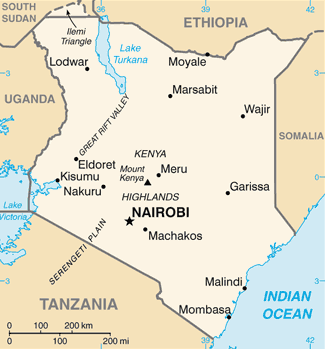
Having recently moved to Kenya to establish ID's first international office, I am often asked by friends, family, and colleagues a simple question, "Why Nairobi?” My answer is often just as simple, "Because Nairobi is positioning itself to become the Silicon Valley of Africa."  What isn't so simple is the justification behind such a claim.  So I'd like to take a crack at explaining exactly why and how Nairobi is rapidly forming into a vibrant and compelling startup hub. 

In Paul Graham's essay "How to Be Silicon Valley," he mentions there are three factors needed to replicate Silicon Valley:  Rich People, Nerds, and the right Environment.  The Rich People have the money and, ideally, the expertise to mentor and seed the Nerds, whose ideas are the foundation upon which companies are built. Graham argues that it is the interplay between these two groups, in a supportive environment, that drives high growth startups.  If a city can duplicate that, he says, then any city can be Silicon Valley.
Check back tomorrow to read about "The Rich People" and why they're important.

#CleanTechThatMatters is on December 14th. 
Follow us on Twitter.

Friday, December 2, 2011

Weekly Review November 27-December 3


After last week’s regional focus on Africa, this week we focused our reading on social enterprise and development in Latin America.

Latin America Report: Ready for Explosive Growth” on Renewable Energy World
Many Latin American nations are reducing their reliance on fossil fuels and by transitioning toward renewable energies like wind, solar, geothermal and biofuels. Wind energy prices are increasingly competitive, especially in Brazil, which are expanding so rapidly that wind farms may very overtake natural gas thermal plants in the next 5 years. With high hopes for solar, Renewable Energy World is launching a weekly report on Latin America. Watch out for in on Wednesdays.

Rural Peru gets connected” by Mattia Cabitza on The Guardian Poverty Matters Blog
Revolutionizing life in Peru, where one in four people live without electricity, 130 rural communities are benefitting from the Euro-Solar Programme. The program reaches “more than 300,000 people whose communities are not connected to the electricity grid.” Each community received solar panels and the free EU kit, which allowed them to run dozens of electronics, including an antenna for satellite Internet. The investment of ~$47.6 million is also benefiting seven other Latin American nations.
                                                                                                                                  
SMEs in South America will be crucial to the development of the region, according to a survey of 170 regional banks that are looking to increase their credit portfolio in the sector. This year, 89% of banks actively lend to SMEs, up 13% from 2008. This type of support and confidence in the SME sector helps foster entrepreneurship and continued growth in the region.

According to Eclac, the UN’s regional economic body, there are 177 million people living in poverty in Latin America. That’s 31.4% of the total regional population. The good news is that level is down from 1990, when 48.4% of the population lived in poverty. Poverty and inequality are on the decline, but to maintain this, there is a need for employment in high productivity sectors. See Eclac’s report for full details: Social Panorama of Latin America 2011 (PDF).

If you’re in Boston, don’t forget to sign up for our event #CleanTechThatMaters on December 14! Find out more here.
Learn more about BETA.
Follow us on Twitter.


Thursday, December 1, 2011

Poverty-Fighting Mobile Transaction Systems (Part 4): Social Capital

This is the fourth post in our series, “Leveraging Mobile Penetration at the BoP for Poverty-Fighting Mobile Transaction Systems.” Click the links below to catch up on anything you might have missed.
Social Capital - Networking and Participation
As we introduced in the first post, the key to a successful mobile technology applications to alleviate poverty is the exchange. In the case of networking and participation, an exchange is the receiving and sending of ideas and opinions and the power to organize or participate in the community.

Mobile phones create powerful social networking opportunities. Mobile applications can offer users the opportunity to leverage their networks for referrals and create opportunities for peer lending.  Social networking tools, everything from SMS to Facebook, facilitate organization and participation, as we witnessed during Egypt’s Arab Spring Revolution. Leveraging mobile ubiquity to expand on social capital reaps many benefits for users in a community where communication tools are limited.  

The mobile phone with its most basic feature, SMS, promotes impact by creating an exchange. NGOs and governments around the world have used SMS texts to inform and alert populations to serious alerts. For example,  FrontlineSMS and Jana (both discussed in this Weekly Review) allow businesses and NGOs alike to communicate with their target market in developing countries. FrontlineSMS prompts consumers to participate and engage through a platform that allows NGOs and businesses to send group texts, asking questions and opinions to a large mobile user base.  Similarly, Jana (formerly Txteagle) collects market research data with mobile phones by allowing businesses and NGOs to distribute surveys via SMS with promotional incentives.

Tying It All Together - Mobile Ubiquity and Reducing Poverty
It is clear that mobile phones provide many benefits to users at the base of the pyramid. In the United States we have access to such benefits and resources not only through mobile phones, but by many other mediums. We can network on LinkedIn, search for jobs on Monster, read reviews of local service providers on Yelp!, take surveys to get coupons, borrow from a bank, use and build credit, and transfer money in seconds on our online banking applications. While some may argue that these seem to be simply promoting consumerism, the key point to highlight once more is the exchange. To reiterate Dr. Harish Hande’s philosophy, we must allow the poor to create their own wealth by giving them the tools to do so. With a mobile phone at the fingertips of over 70% of the world and a growing community of social innovators, we can create mobile technologies for sustainable global development.

What other ways can we leverage mobile ubiquity to create poverty-fighting technology?